
1
Aarhus South logistics portal
Connection to the southern Aarhus hinterland, E45/East Jutland freight flows and future automated terminal operations.
A three-bore tunnel concept prepared as a feasibility conversation starter for The Boring Company: two compact automated passenger tubes and one larger uncrewed freight tube, routed from the southern Aarhus hinterland via Samsø to Kalundborg.
The alignment uses the classic Kattegat logic via Samsø, but shifts the eastern emphasis toward Kalundborg because industry, harbour access, road corridors and rail corridors already point from this area toward Greater Copenhagen.
Figures are concept-level: approximately 20 km Jutland–Samsø, 7 km across/under Samsø and 19–21 km Samsø–Zealand/Røsnæs/Kalundborg approach. Final portals and land approaches require geotechnical and environmental studies.
Connection to the southern Aarhus hinterland, E45/East Jutland freight flows and future automated terminal operations.
A practical western coastal transition south of Aarhus, compatible with previous Kattegat corridor thinking.
Deep-bored subsea section with no bridge pylons, no high-level wind exposure and minimal surface conflict with shipping.
A central service, emergency, power, drainage and maintenance node. The public surface footprint can be minimized or integrated with a controlled technical site.
Eastern subsea approach to Zealand, with onward access to Kalundborg’s industrial base and the Copenhagen corridor.
The freight tube is not a public road tunnel. It is a controlled industrial transport envelope, normally closed to passengers and operated by automated electric carriers.
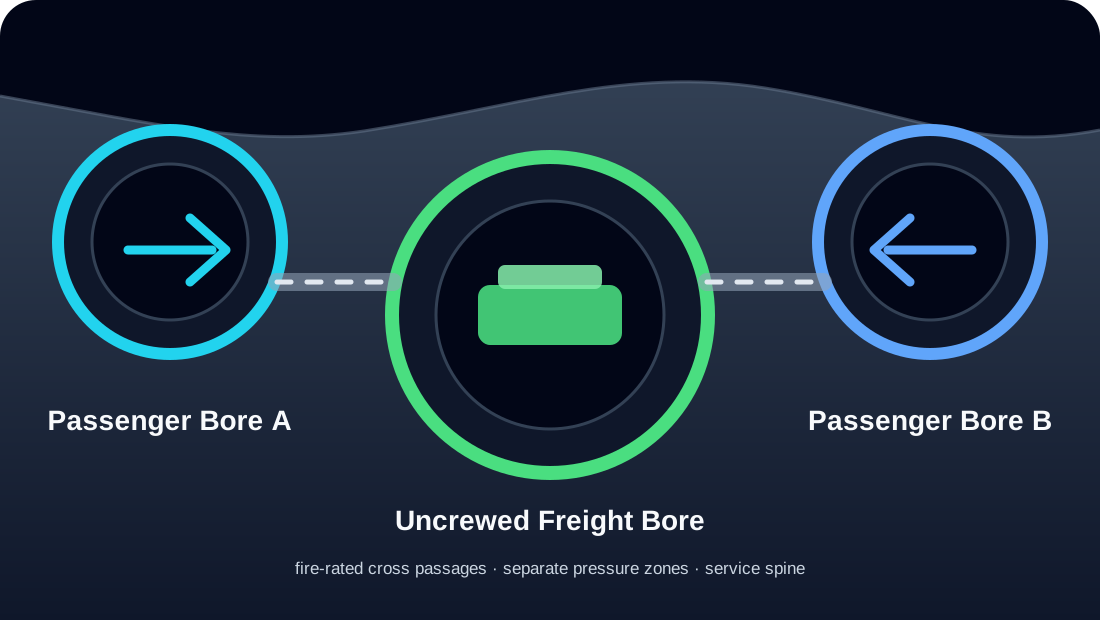
Dedicated one-way bores for autonomous electric vehicles or purpose-built pods. Small diameter lowers excavation volume and separates passenger risk from freight operations.
A larger reversible bore for automated container carriers, trailers without tractors and occasional controlled service vehicles. Routine passenger presence is excluded.
Fire-rated cross passages and service galleries connect the bores at controlled nodes. Air, smoke and evacuation zones are separated in normal operation.
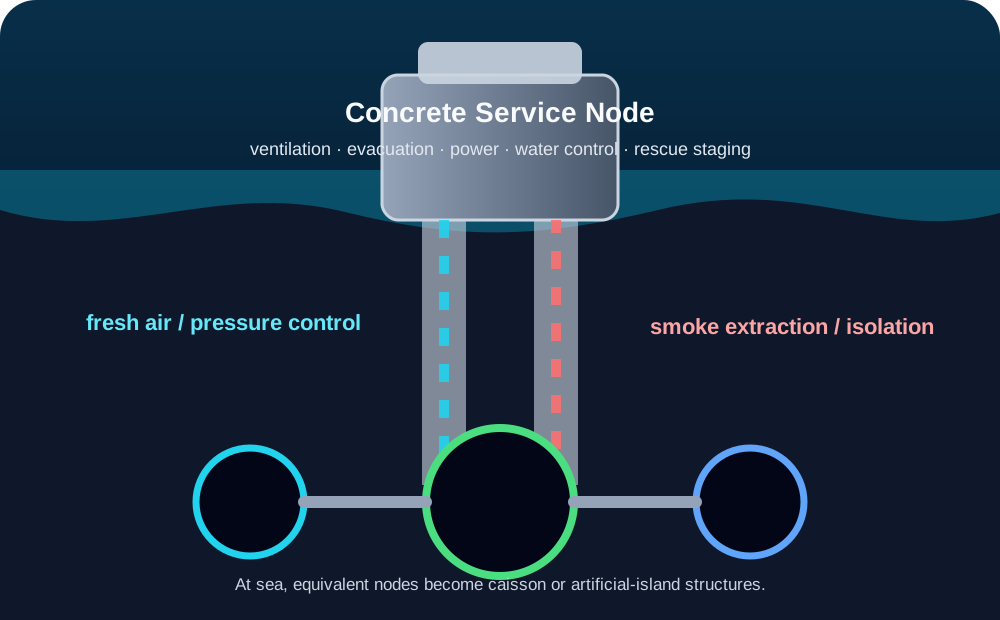
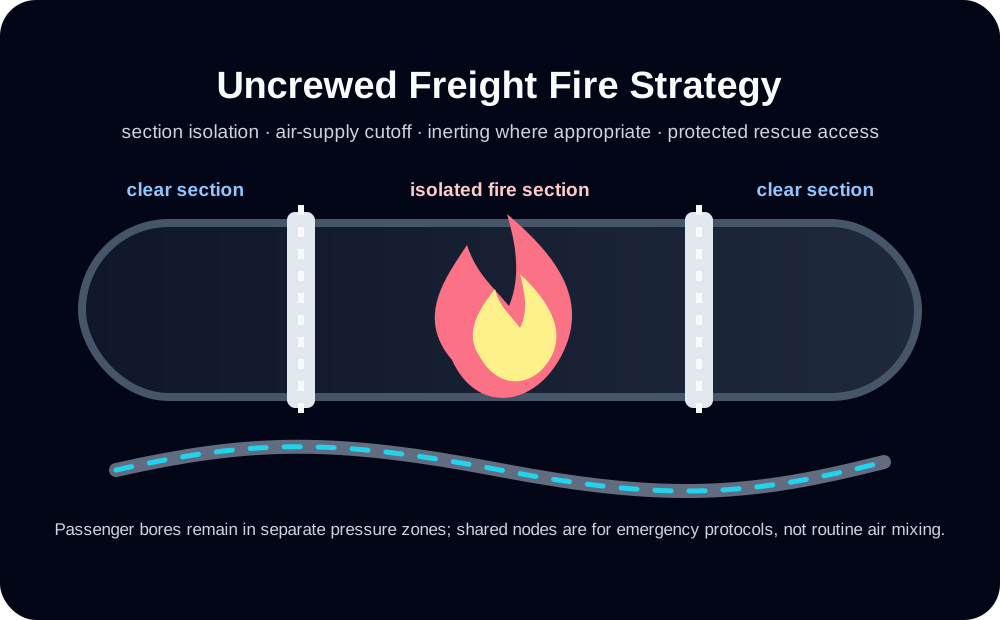
In passenger tunnels, ventilation must protect people from smoke and maintain tenable escape conditions. In an uncrewed electric freight bore, the design can also use aggressive section isolation, air-supply cutoff or inerting strategies that would not be acceptable where passengers are present.
Lower routine ventilation demand. Normal freight operation has no public passenger comfort requirement and no combustion-engine exhaust if all carriers are electric.
Air starvation as a tool, not a slogan. A sealed freight section can be isolated by dampers and pressure control, but battery incidents, cargo fire chemistry, heat load and reignition must still be engineered.
Passenger bores stay protected. Separate pressure zones and fire-rated interfaces prevent smoke, oxygen-depleted air or toxic gases from migrating into passenger tubes.
Large service nodes have multiple jobs. Surface concrete structures can provide evacuation access, ventilation, rescue staging, power conversion, water handling, communications and maintenance logistics.
Deep boring reduces surface conflict. It avoids bridge pylons, weather exposure and visual intrusion, but does not remove the need for full geotechnical mapping of seabed strata, water pressure, fault zones, sand lenses and gas risks.
A single freight bore can move traffic in one direction at a time: eastbound container convoys, a clearance and inspection window, then westbound convoys. The operating model is closer to a controlled shuttle system than an open road.
Automated carriers load at Aarhus South or Kalundborg, move as a supervised batch, then clear the bore before the opposite direction opens. Trailer modules can be supported if their geometry and fire risk are compatible with the freight bore.
Design implication: terminal throughput and automated loading may matter as much as tunnel speed.
Passenger tubes operate continuously in opposite directions with electric automated vehicles, protected from freight events by physical separation and independent ventilation control.
Design implication: vehicle design, evacuation cross-passage spacing and rescue access define the practical tube diameter.
The freight bore can enter inspection or maintenance mode with no public passengers present. Service vehicles, robots and emergency crews operate under ventilation and isolation protocols.
Design implication: rescue and maintenance access must be possible without contaminating the passenger ventilation zones.
This is a concept brief, not an engineering design. The first request is a high-level assessment of bore diameters, boring rates, cost drivers, safety architecture, freight automation and whether a Kattegat pilot segment could be staged from multiple portals.
This concept is not affiliated with The Boring Company. The Boring Company name is used only as the intended recipient of a feasibility enquiry.